Safe sleep for newborns: position, cot and room temperature
Put your newborn on their back for every sleep, in their own clear cot with a firm, flat mattress, in the same room as you. Here is the NHS’s advice, and how to apply it in a warm Bangkok bedroom.
3 min read
The NHS puts it in one sentence: the safest place for your baby to sleep for the first 6 months is in a cot, lying on their back, in the same room as you. The rest of its advice follows from that.
On their back, for every sleep
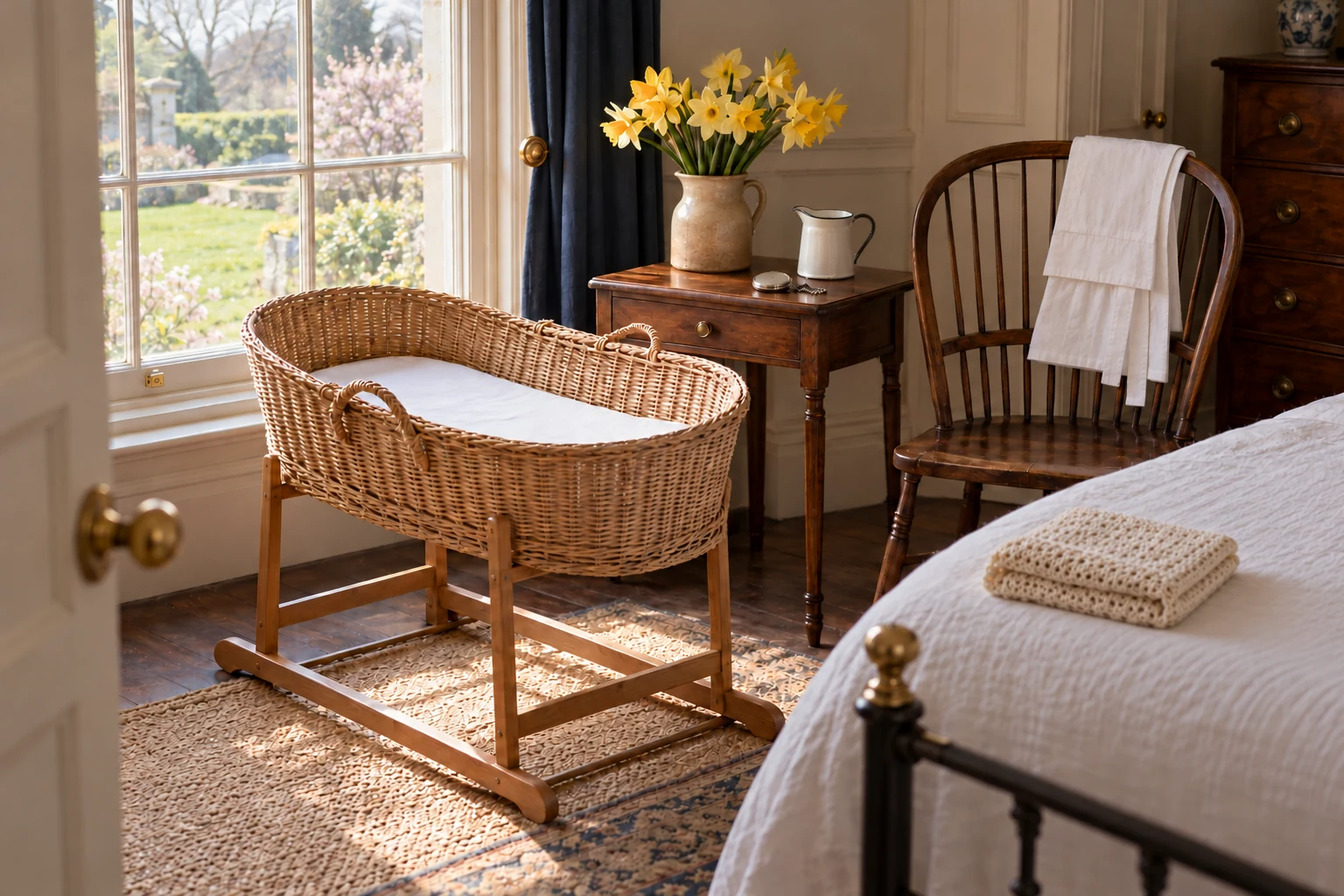
Put your baby down on their back for every sleep, day and night, with their feet nearest the foot of the cot or Moses basket.
A clear, flat cot
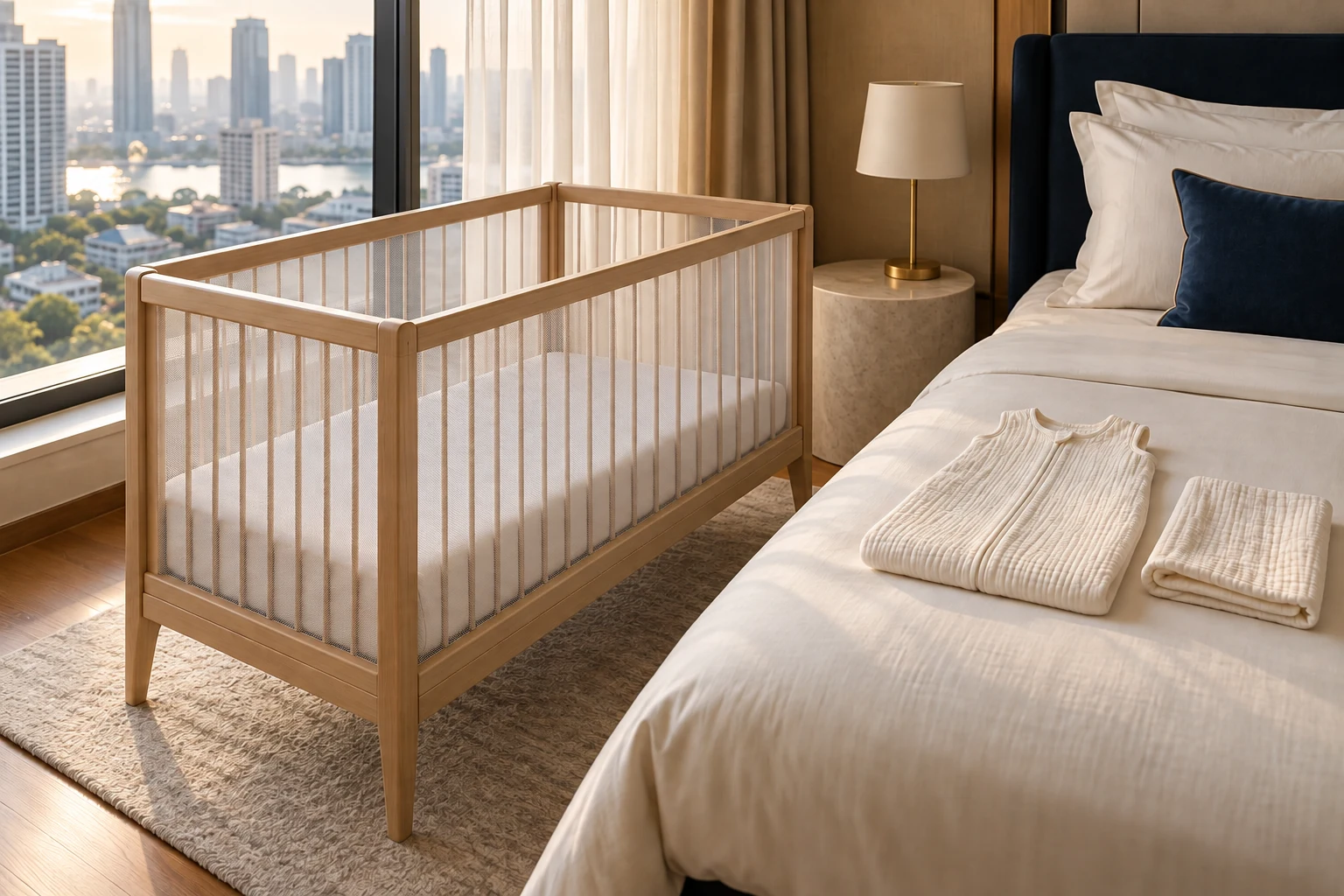
- A firm, flat, waterproof mattress: your baby’s head should not sink into it by more than a few millimetres.
- Keep the cot clear of pillows, cot bumpers, soft toys and loose bedding that could cover your baby’s mouth or nose.
- No sleeping pods or nests, which have raised or cushioned sides.
- A baby sleeping bag that fits well around the shoulders, with no other bedding; or a cellular cotton blanket tucked in firmly, no higher than the shoulders.
In your room for the first 6 months
The NHS advises keeping your baby in the same room as you for the first 6 months, and The Lullaby Trust, a UK charity for safer baby sleep, for every sleep, day and night, for at least the first 6 months. If you bring your baby into your bed for a feed or a cuddle, put them back in their cot before you go to sleep.
Never fall asleep with your baby on a sofa or chair
The NHS warns that falling asleep on a sofa or chair with your baby can increase the risk of sudden infant death syndrome (SIDS) substantially. If you feel yourself dozing during a night feed, put your baby back in their cot.
When is sharing a bed not safe?
The NHS says a cot in your room is always safer than sharing your bed, and that you should never share a bed with your baby if:
- you are extremely tired, or your baby has a fever or other signs of illness;
- your baby was born before 37 weeks or had a birthweight under 2.5 kg;
- you or your partner smoke, or have been drinking alcohol, taking recreational drugs or taking medication that makes you drowsy.
What room temperature and sleeping bag should you use?
Overheating matters too. The Lullaby Trust recommends a room temperature of 16 to 20°C, so measure the temperature in the room where your baby sleeps. Tog describes how warm a sleeping bag is, and the NHS gives these ranges: 2.5 tog for a room of 16 to 20°C, 1.0 tog for 20 to 24°C and 0.5 tog for 24 to 27°C; it gives none above 27°C.
To check whether your baby is too hot, feel their chest or the back of their neck (hands and feet are usually cooler, which is normal). If their skin is hot or sweaty, remove a layer of clothing or bedding. Babies do not need hats indoors, and anything soft should stay away from their head.
Who watches over the night?
Safe sleep matters for every sleep, day and night, including the small hours when everyone is tired. Whoever helps you at night, ask how they settle a baby to sleep and what they do if something worries them.
If your baby has difficulty breathing or cannot be woken, call 1669 at once for emergency medical help in Thailand. For any other worry about your baby’s health or breathing, contact your doctor straight away.
During The Signature 10, our care team looks after mother and baby day and night in your suite, so that you can rest, and if you or your baby need a doctor, we contact your own doctor or hospital straight away.